Hardwood Flooring in Riverside: Choosing for Older and Newer Homes
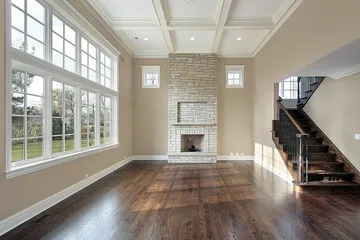
Riverside is one of the more interesting places we install hardwood, because the city contains two housing stocks that need almost opposite approaches. Get that distinction right and the rest of the decisions follow easily.
Older Riverside: you may already have hardwood
The Wood Streets and the older neighborhoods around downtown are full of pre-1950 homes, and a large share of them have original hardwood sitting under carpet that somebody installed in the 1970s.
Before you spend a dollar on new flooring in an older Riverside home, check what is already there. Pulling back a corner of carpet in a closet takes two minutes.
What you are likely to find depends on the era. Craftsman bungalows from the 1900s to 1920s typically have Douglas fir or old-growth pine. The 1920s to 1940s Spanish revival homes often have quartersawn white oak with tighter grain than anything in commercial supply today. Post-war ranch homes usually have solid red oak strip, almost always thick enough to refinish.
If it is structurally sound, refinishing original wood is nearly always cheaper and better than covering it with new material, and old-growth wood is genuinely better than what you can buy now. Our post on restoring historic floors in Redlands and Riverside covers the assessment in detail.
Newer Riverside: the slab question
Newer Riverside construction sits on concrete slabs, and that changes the answer entirely.
Slabs pass moisture vapor upward from the ground continuously, which is why solid hardwood is generally not recommended directly over concrete. Engineered hardwood is the way to get real wood in these homes. It has a genuine hardwood wear layer over a cross-laminated core that resists both slab moisture and the seasonal movement our dry climate causes.
The one spec that matters most with engineered is wear layer thickness. A thick one can be sanded and refinished once or twice, meaning the floor can be brought back decades from now. A thin one cannot be refinished at all. Ask for the number before anything else.
Choosing species
Red oak is the Inland Empire default for good reason. Hard, widely available, affordable, and its strong grain hides scratches and dents better than smoother woods. It carries warm undertones, which matters when picking stain.
White oak is slightly harder, more water resistant, and reads more neutral, which is why it takes modern gray and light finishes cleanly where red oak fights them.
Hickory is harder still with dramatic board-to-board color variation, good for busy households.
Walnut is beautiful and naturally dark, and noticeably softer, so it suits formal rooms rather than entries.
Whatever the species, choose the stain color on your own sanded floor rather than from a showroom chip. Wood species, age, and your room's light all change how a stain reads, and Riverside light is bright.
Living with hardwood in a dry climate
Our climate pulls moisture out of wood for much of the year, and boards shrink across their width in response. Two things keep that manageable: acclimating the flooring inside the home before installation, and keeping the house within a normal comfort range rather than letting it swing.
Direct sun is the other Riverside factor. Strong sunlight through large windows will fade and shift the color of a wood floor over years, more noticeably on darker stains. Window coverings and moving rugs occasionally both help.
Have someone look first
The most useful thing you can do is get someone to look at your actual rooms, subfloor and light before committing to a species or a finish. We install and refinish across Riverside and the surrounding Inland Empire.
Frequently asked questions
- Might there be hardwood under my carpet in an older Riverside home?
- Very possibly. The Wood Streets and older neighborhoods around downtown are full of pre-1950 homes with original Douglas fir or oak under carpet installed decades later. Pulling back a corner of carpet in a closet takes two minutes and can save a great deal of money.
- Can I install solid hardwood in a newer Riverside home?
- Usually not directly, because newer construction sits on concrete slabs and slabs pass moisture vapor upward continuously. Engineered hardwood gives you a genuine hardwood surface over a core that handles slab moisture, and it is the practical way to get real wood in those homes.
- What hardwood species works best in the Inland Empire?
- Red oak is the regional default because it is hard, available, affordable, and its grain hides wear well. White oak is slightly harder and takes cool and gray finishes more cleanly. Hickory suits busy households, and walnut is beautiful but softer and better in formal rooms.
- Will sunlight fade my hardwood floor?
- Over years, yes, particularly with strong Riverside light through large windows, and it shows more on darker stains. Window coverings help, and moving rugs occasionally prevents sharply defined lines where the covered area stays darker than the exposed floor.