Refinishing Hardwood Stairs: What Changes When the Floor Goes Vertical
A worn staircase is often the first thing that makes a house look tired. The finish goes gray down the middle of every tread, the nosings get rounded and dark, and the stairs stop matching the floor at the bottom. If the treads are real hardwood, refinishing them in place can bring them back without replacing anything.
It is a different job from refinishing a floor, though, and it helps to know why.
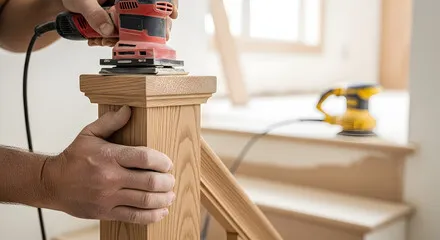
Stairs are sanded mostly by hand
A floor is sanded with a large drum or belt sander that covers ground quickly. None of that fits on a stair tread. Each tread is sanded with smaller edge and detail sanders, then the corners, the area against the stringers, and the back of the tread where it meets the riser are finished by hand scraping and hand sanding.
The nosing is the hardest part. It is rounded, it takes most of the wear, and it has to come out smooth and even all the way across or it catches the light wrong on every step. This is where most of the time goes, and it is why stairs are priced per tread instead of by area.
What we check first
Are the treads solid wood? Many stairs that look like hardwood are a thin veneer or a cap over a plywood or particleboard tread. A cap with a thick wear layer can sometimes be lightly sanded. A thin veneer cannot. We check this before quoting, usually from the underside or an exposed edge.
How worn are the nosings? On older stairs the front edge can be worn down unevenly, sometimes split or chipped. Light wear sands out. A nosing that has lost its shape, or a tread that is cracked or soft, is better replaced than refinished. Replacing one or two treads and refinishing the rest is common.
Were the stairs carpeted? Pulling up carpet from stairs leaves staples, tack strip nail holes, and sometimes paint drips along the edges. The holes can be filled with wood filler tinted to the stain, but on a lighter floor they will still be faintly visible. If there are hundreds of them, new treads may look better. Our stair installation post covers what happens when what is under the carpet is not worth keeping.
Risers: paint or stain?
Risers take almost no foot traffic, so they do not need the same protection as treads. Many homeowners paint them white or to match the trim, which makes the staircase look crisp and hides any mismatched wood or old repairs on the risers. Others stain risers to match the treads for an all-wood look.
Painted risers with stained treads is the more forgiving choice on older stairs. All-wood stairs look best when the risers are in good shape and the same species as the treads.
Matching the floor
If the floor at the top or bottom is being refinished at the same time, the stairs get the same stain and finish and match naturally. If the floor is not being touched, the stairs have to be matched to wood that has aged and changed color for years. We test stain on a tread and hold it next to the floor in the stairway's own light before doing the whole run. Our sand and stain guide explains the test.
For finish, we use a satin sheen on stairs. Gloss looks dramatic but it is more slippery and shows every scuff on the nosings.
Rails and balusters
Handrails and newel posts can usually be sanded and refinished to match the treads at the same time. Swapping old wood spindles for iron balusters is a popular update, and it is easiest to do during a stair project, before the final finish goes on. Full railing replacement is a bigger job and is quoted separately.
Living with it during the job
For most homes the staircase is the only way upstairs. A common approach is to finish every other tread first, let them dry, then do the rest, so you can still go up and down carefully. We plan the order around your household and the finish dry times. If someone in the house has trouble with stairs, mention it at the estimate.
Most staircases take two to four days from start to finish depending on how many treads there are, how much repair they need, and the finish system.
Refinish or replace?
Refinish when the treads are solid wood, the nosings still have their shape, and the damage is wear rather than structure. Replace when treads are veneer, cracked, soft, or covered in carpet holes you do not want to see. Our stair installation and refinishing service covers both, and often the answer is a mix.
Book a free estimate and we will look at the treads, the nosings and the floor they need to match before recommending either.
Frequently asked questions
- Can hardwood stairs be refinished?
- Yes, if the treads are solid hardwood or have a thick enough wear layer. Each tread is sanded with small edge and detail sanders and finished by hand around the nosing and corners, then stained and sealed. Thin veneer treads usually need replacing instead.
- How long does it take to refinish a staircase?
- Most staircases take two to four days, depending on the number of treads, how much repair the nosings need, and the finish system. Finishing every other tread first lets the household keep using the stairs carefully during the job.
- Should stair risers be painted or stained?
- Either works. Painted risers with stained treads is the more forgiving look on older stairs because it hides mismatched wood and old repairs. Stained risers suit stairs where the risers are in good shape and the same species as the treads.
- Can carpeted stairs be refinished after the carpet is removed?
- Sometimes. If the treads underneath are hardwood, the staple and tack strip holes can be filled and the treads refinished, though the filled holes may stay faintly visible on lighter stains. If the treads are construction-grade material, new hardwood treads are the better route.