How Much Does Hardwood Floor Refinishing Cost in the Inland Empire? (2026)
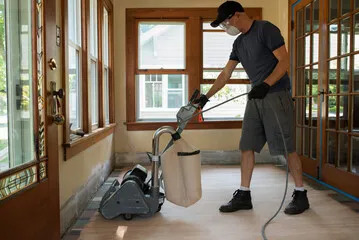
The short answer: a full sand, stain and seal in the Inland Empire runs $3 to $8 per square foot. A screen and recoat, which renews the finish without sanding to bare wood, costs a fraction of that.
The long answer is more useful, because two houses with the same square footage can land at opposite ends of that range. Here is what decides where yours falls.
What is in the price
A refinishing quote should cover the whole job, not just the sanding:
- Sanding to bare wood in several passes, including hand-edging along walls and in closets
- Repairs to boards that are cracked, gouged or water-damaged, replaced before sanding so they blend
- Stain, if you are changing or restoring the color, including a test patch in your home
- Sealer and two to three coats of finish, with cure time between coats
- Dust containment, cleanup and moving furniture if you have arranged it
Stairs are always quoted separately, per step, because each tread and riser is hand work. Our stair refinishing page covers what that involves.
What pushes a floor toward $3
- Natural finish, no stain. Skipping the stain step saves a day and a coat.
- Open rooms with few closets. Edging is slow. A wide-open living room sands fast.
- Sound wood in good condition. No board replacement, no pet-stain sanding, no filler.
- A floor that has been recoated on schedule, so the sanding is light.
What pushes it toward $8
- Dark or custom-matched stain. More coats, more care, more time.
- Damage in the wood. Pet urine stains, deep gouges and water marks need extra sanding or board replacement before anything else. Our floor repair guide covers what can be saved.
- Lots of edges. Hallways, closets, built-ins and small bedrooms are mostly edging.
- Old finish that fights the sander. Wax, multiple layers of old oil finish or an aluminum-oxide factory finish take longer to remove.
- Oil-based finish with its longer cure times, versus water-based polyurethane.
- Herringbone, parquet or borders, which need directional sanding.
The math for a real house
Take a common Inland Empire layout: a 400 square foot living room, a 150 square foot hallway and two 150 square foot bedrooms, all oak, all in fair shape, with a stain change to a medium brown.
- 850 square feet at the middle of the range, around $5 to $6, lands at $4,250 to $5,100.
- Skip the stain and go natural with a water-based finish, and the same floor is closer to $3,000 to $3,800.
- Add a flight of 13 stairs, and you add a separate stair line on top.
Contrast that with a new floor. Hardwood installation in the Inland Empire runs $8 to $16 per square foot installed, before demolition of the old floor, so the same 850 square feet is $6,800 to $13,600 as a replacement. Our installation cost guide breaks that number down. Refinishing is almost always the better spend if the wood is sound, and our post on refinishing versus replacing covers how to tell.
When you only need a recoat
Before booking a full sand, do the water test from our screen and recoat guide. If water beads on the floor in your busiest walkway, the finish is intact and a recoat will likely do. That is a one-day job at a fraction of the price, and it cannot change the color.
If the water soaks in and darkens the wood, the finish is gone and you are in full-refinish territory.
Engineered floors: check before you quote
Engineered hardwood can be refinished if the top wear layer is thick enough, generally 3 mm or more, and usually only once or twice. A thin veneer cannot take a full sand at all. We measure at the estimate rather than guessing, because sanding through a veneer is not a mistake anyone gets to undo.
Timeline, since it affects cost too
A full refinish takes three to five days including cure time. You can walk in socks after 24 hours, shoes after 48, furniture back after five to seven days, and rugs after two weeks. If you need to stay out of the house, that is a cost too, and it is a reason some homeowners phase a refinish room by room.
Our dustless refinishing guide explains how we contain the dust so the rest of the house stays livable during the work.
How to compare quotes
Ask every contractor the same four things:
- Is the price per square foot, and does it include stain, sealer and how many finish coats?
- Are repairs included, or is there an allowance for board replacement?
- Are stairs a separate line, and per step or per flight?
- Is the finish water-based or oil-based, and why?
A quote that is far below the range usually means fewer finish coats or no repairs. A quote far above it should come with a reason you can see in the floor.
Paying for it
Refinishing is often small enough to pay outright, and where it is not, financing is available. Our post on paying for new floors covers phasing and financing for larger projects.
For a number that reflects your actual floor, book a free estimate. We check the wood thickness, look for damage, and give you a written price with the stain, coats and stairs spelled out.
Frequently asked questions
- How much does it cost to refinish hardwood floors in the Inland Empire?
- A full sand, stain and seal runs $3 to $8 per square foot across San Bernardino, Riverside and surrounding cities. Natural finishes on sound, open floors sit near the bottom; dark custom stains, repairs and edge-heavy layouts push toward the top. Stairs are quoted separately per step.
- Is refinishing cheaper than replacing hardwood floors?
- Yes, by a wide margin. Refinishing runs $3 to $8 per square foot while new hardwood installation runs $8 to $16 per square foot before removing the old floor. If the wood is sound and thick enough to sand, refinishing is almost always the better spend.
- How long does hardwood floor refinishing take?
- Three to five days for most homes, including cure time between coats. Sock feet after 24 hours, shoes after 48, furniture back after five to seven days, and rugs after two weeks.
- Can engineered hardwood be refinished?
- Only if the top wear layer is thick enough, usually 3 mm or more, and typically just once or twice over its life. Thin-veneer engineered floors cannot take a full sand. We measure the wear layer at the estimate before quoting.