Floor Repair: What Can Be Saved
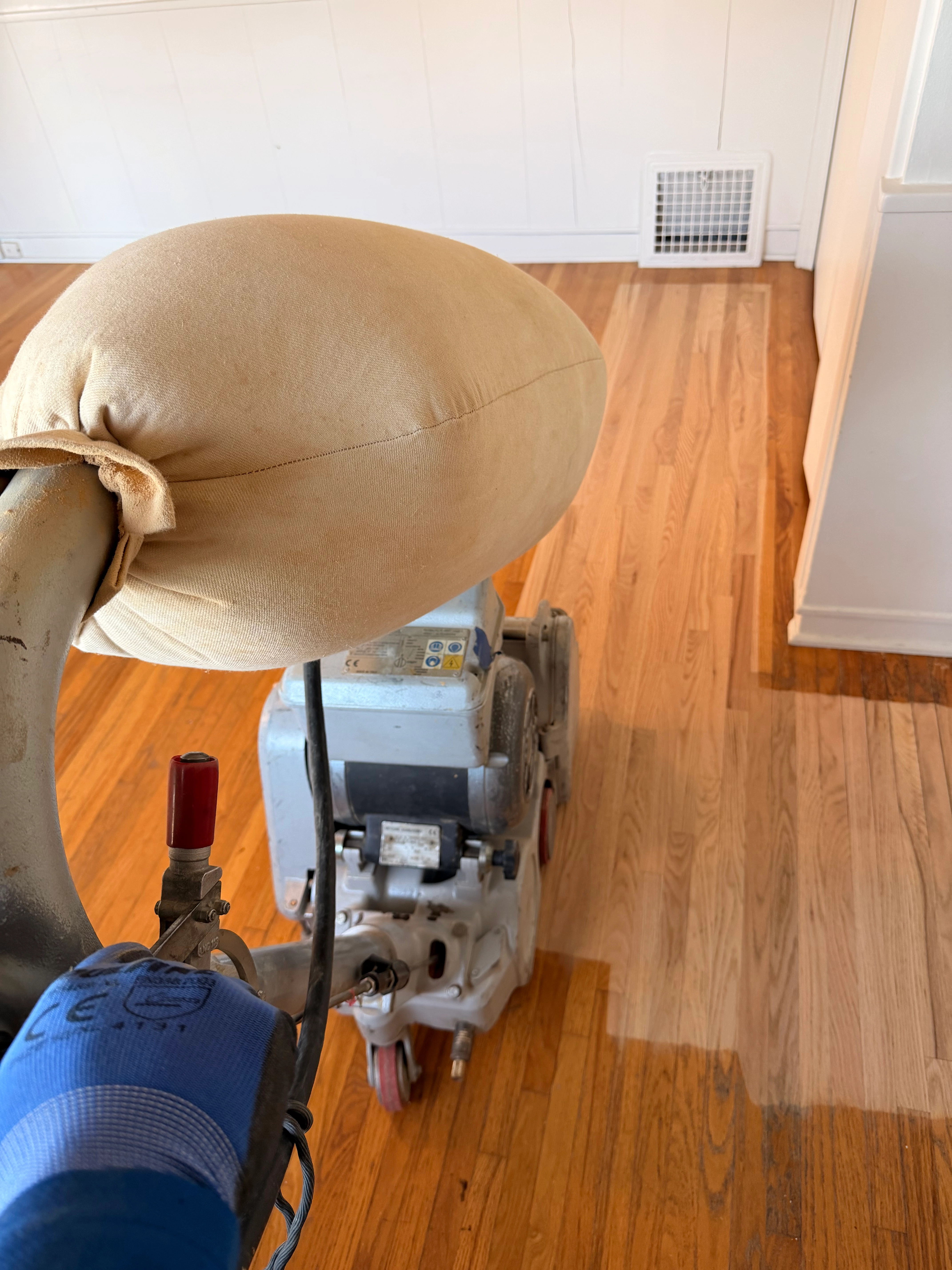
A damaged floor does not usually mean a new floor. A fair proportion of what we are called out to look at across the Inland Empire turns out to be a repair, and the cost difference between fixing and replacing is large enough to be worth an hour of someone's time to find out.
Here is how we work out which one you have.
Squeaks
Movement, almost always. Either the floor is moving against the subfloor or the subfloor is moving against the joists beneath. Something worked loose and two surfaces are rubbing.
The fix depends on access. From below, if there is a crawlspace, it can often be dealt with without touching your floor at all. From above it means refastening and concealing the fixings.
Worth doing during any other flooring work, because the floor is already open and the marginal cost is small. Our guide on fixing squeaky hardwood floors covers the detail.
Soft spots
This is the symptom to take seriously.
If an area gives underfoot or feels springy, the problem is not the floor covering — it is what is under it. Subfloor weakened by moisture loses stiffness before it fails outright.
Covering a soft spot with new flooring hides it until it gets worse. This is the one thing we would push you to have looked at properly rather than left, because the repair only gets larger.
Damaged individual boards
A gouge, a burn, a pet-damaged patch or a section under a leak does not require replacing a floor. Individual boards can be lifted out and replaced.
The honest limitation is matching. Your existing floor has aged and, under Inland Empire sun, has changed color. A new board in the same species will not match on day one, though it closes the gap over time.
Where an exact match matters, the trick is to take boards from somewhere invisible — inside a closet, under a permanent appliance — and put the new material in the hidden spot instead. That is the difference between a repair you notice and one you do not.
Lifted or peaked floating floors
With laminate and click-together vinyl, planks that have risen against each other usually mean the floor had nowhere to expand.
These floors are designed to move slightly and need an expansion gap around the perimeter, hidden under the baseboard. When that gap was cut too small, or when something later pinned the floor down, the expansion has to go somewhere.
The fix is normally to release the perimeter rather than replace anything — a much better conversation than the one people expect to have.
Scratches and dull finish
If the damage is in the finish rather than the wood, this is not a repair at all. A screen and recoat abrades the old finish and lays a fresh coat, without sanding into the wood.
Quick test: run a fingernail across the mark. If it catches, it is into the wood and needs sanding. If it does not, a recoat handles it for a fraction of the cost.
When we would say replace
- The subfloor has failed across a meaningful area.
- The same failure keeps recurring, which means the cause is systemic rather than local.
- The material is discontinued and a visible mismatch would bother you daily.
- The floor has been refinished as many times as its wear layer allows.
In those cases a repair is money spent twice and we will say so rather than take the work.
Getting it assessed
We look before quoting, because the useful information is usually underneath rather than visible. If the answer is a downspout and a loose board, that is what we will tell you.
Our floor repair service covers the range, and a free estimate costs nothing but the visit.
Frequently asked questions
- Is it cheaper to repair or replace a floor?
- Repair, in most cases where the damage is localized and the rest of the floor is sound. Replacement makes sense when the subfloor has failed, when the same problem recurs across the whole floor, or when the material is discontinued and a match is impossible.
- Can you replace just a few damaged boards?
- Yes. The limitation is color matching, because your existing floor has aged. Where an exact match matters we take boards from a hidden area, a closet or under an appliance, and put the new material there instead.
- Why is part of my floor springy?
- Almost always weakened subfloor rather than a problem with the flooring itself, and moisture is the usual cause. It is the one symptom worth acting on quickly, because covering it over does not stop it progressing.
- My laminate has lifted at the seams. Does it need replacing?
- Usually not. Floating floors need an expansion gap around the perimeter, and lifting normally means that gap was too small or something has pinned the floor down. Releasing the perimeter often resolves it without replacing any planks.