Luxury Vinyl Plank vs Laminate for Inland Empire Homes
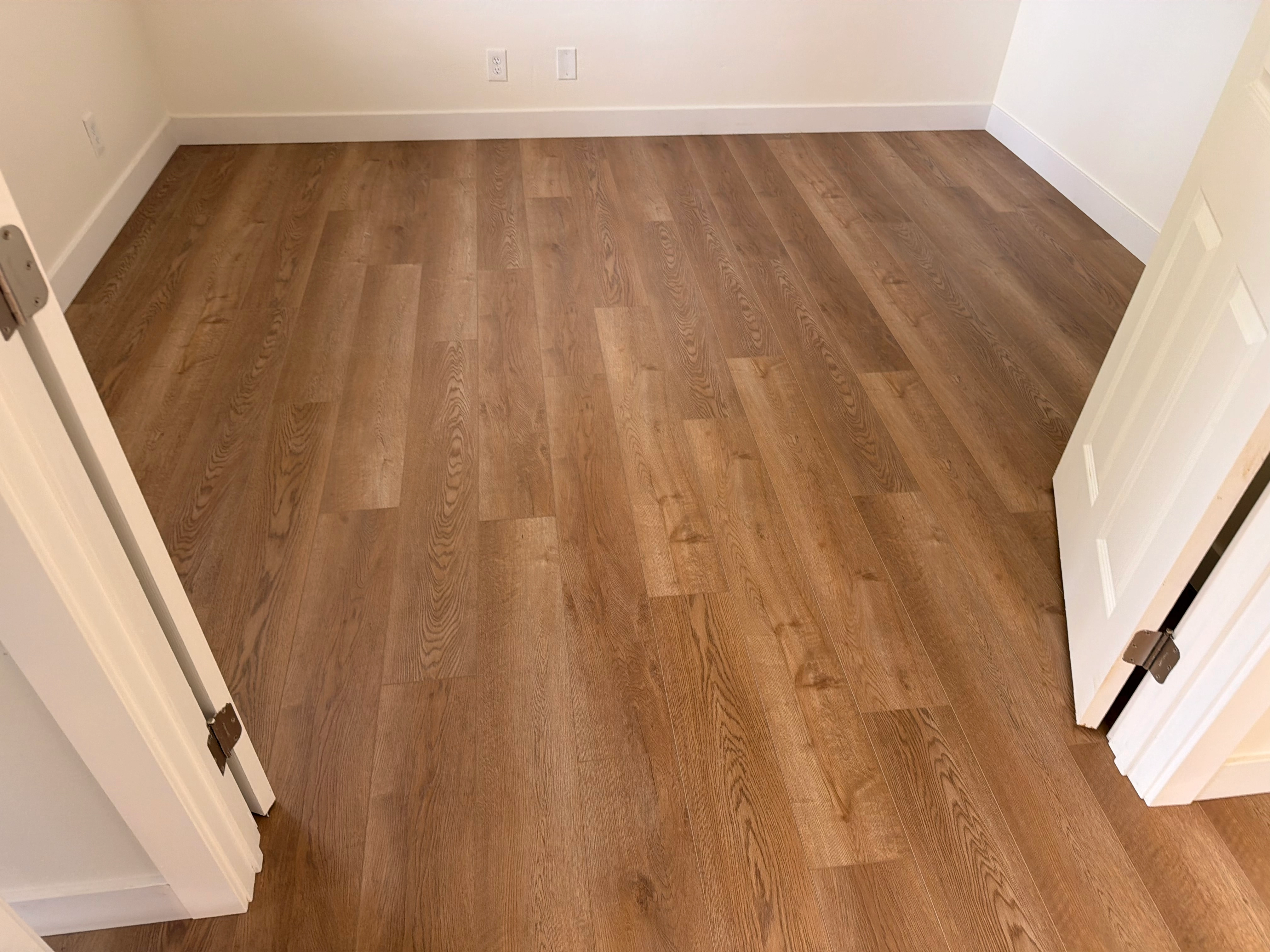
In the showroom, luxury vinyl plank and laminate look like twins - both are wood-look planks that click together, both cost less than hardwood, both come in similar colors. But they're made of different stuff, and that difference decides how they hold up to water, weight, and years of a busy household. Here's the honest luxury vinyl plank vs laminate breakdown we give homeowners every week.
What each one actually is
- Luxury vinyl plank (LVP) is built on a rigid or flexible vinyl core with a printed wood-look layer and a clear wear layer on top. The core is plastic, so water can't hurt it.
- Laminate is built on a high-density fiberboard (HDF) core - essentially compressed wood - with a printed image and a hard melamine wear layer on top. The wear layer is genuinely tough, but the core is wood-based.
That single difference - plastic core vs wood core - drives almost everything below.
Water: LVP wins, clearly
This is the big one. LVP is waterproof. Spills, pet accidents, a leaking dishwasher, mopping - it shrugs them off. Laminate is water-resistant at best. A quick wipe-up is fine, but standing water that sits in the seams can swell the fiberboard core, and once a laminate plank swells, it doesn't shrink back - it has to be replaced.
For kitchens, bathrooms, laundry rooms, mudrooms, and any home with pets or kids, this alone settles it: choose LVP.
Durability and feel
Laminate's melamine surface is exceptionally hard and scratch-resistant - often a notch harder than LVP's wear layer, which is why it does well against dog nails and dragged chairs. LVP is softer and a little quieter and warmer underfoot, and it dents more easily under heavy point loads (think a refrigerator or a piano leg).
So: laminate resists surface scratches slightly better; LVP resists water and handles dents about the same or slightly worse. Neither is fragile.
Cost
The two are close. In the Inland Empire, both generally run $4 to $9 per square foot installed, depending on the product's thickness, wear-layer rating, and how much subfloor prep the room needs. Premium rigid-core LVP with a thick wear layer sits at the top of that range; entry-level laminate at the bottom. Don't choose on price alone - the room matters more.
Which rooms get which
Here's how we usually lay it out for a whole house:
- Kitchen, baths, laundry, entry, mudroom: LVP, every time. Water exposure decides it.
- Bedrooms, dry living rooms, home office, hallways: either works. Laminate is a strong value here, and its harder surface is nice in high-traffic halls.
- Whole-house, one product, pets or kids: LVP for the peace of mind.
- Whole-house on a tighter budget, dry floor plan: laminate throughout can be a smart, good-looking choice.
The install details that matter more than the brand
Both are floating floors, and both are only as good as the prep underneath. On the slab foundations common across the Inland Empire, that means a flat subfloor, the right underlayment, and correct expansion gaps at the walls so the floor can move with our temperature swings. A quality plank installed carelessly still fails; a mid-range plank installed right lasts for years.
Want to go deeper on cores and wear layers? Our guide on laminate vs LVP breaks down the specs, and if you're also weighing real wood, see hardwood vs luxury vinyl plank.
The short version: when water is anywhere in the picture, choose luxury vinyl plank. For dry rooms on a budget, laminate is a genuine value. We bring both to every visit so you can flex a plank, drop water on it, and feel the difference yourself. Book a free estimate and we'll help you match the right product to each room.
Frequently asked questions
- Is luxury vinyl plank better than laminate?
- It depends on the room. LVP is waterproof, so it wins in kitchens, bathrooms, laundry rooms, and pet households. Laminate has a slightly harder, more scratch-resistant surface and is a strong value in dry bedrooms, living rooms, and hallways.
- Is laminate flooring waterproof?
- No. Laminate is water-resistant at best. Quick spills are fine if wiped up, but standing water can swell its fiberboard core, and a swollen plank has to be replaced. For wet areas, choose luxury vinyl plank instead.
- Does LVP or laminate cost more?
- They are close. Both generally run $4 to $9 per square foot installed in the Inland Empire. Premium rigid-core LVP sits at the top of that range, while entry-level laminate sits at the bottom. Room use should drive the choice more than price.
- Which is more scratch-resistant, LVP or laminate?
- Laminate typically has a slightly harder melamine wear surface, so it resists surface scratches from pet nails and dragged furniture a bit better. LVP is softer and warmer underfoot but more resistant to water and moisture.