Can New Hardwood Match Your Existing Floors? Lace-Ins, Weave-Ins and When to Refinish Everything
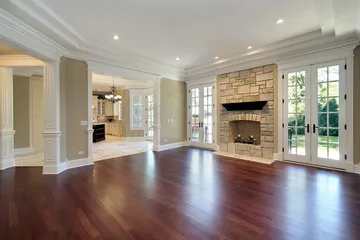
Three situations bring us this question every week. A wall came out between a hardwood living room and a carpeted dining room. An addition is going on the back of a house with original oak. A section under a leak or a pet has to be replaced.
In every case the homeowner wants the new wood to disappear into the old. Sometimes that is achievable. Sometimes the honest answer is different, and it is better to hear it before the work starts.
Why new boards never match on day one
Even if we source the exact species, cut, width and grade of your existing floor, the new boards will look different when they go in. Two reasons.
Your floor has aged. Wood changes color with light and time. Oak yellows and deepens. Under the Inland Empire sun, a floor that has been down fifteen years is a different color from the same oak fresh from the mill, and the difference is largest in the rooms with the most window.
Your floor has a finish on it. Whatever stain and topcoat went on originally have also aged, and an oil-based finish in particular ambers for years. A new board with a new coat of the same finish starts several years behind.
Unfinished new boards, sanded and finished together with the old floor, close that gap. Prefinished boards dropped in next to an old floor do not, and they never fully will.
Getting the material right
Before anything else, the new wood has to be the same:
- Species. Red oak and white oak look similar in the store and very different once stained. Our oak flooring guide shows the difference.
- Width and thickness. A 2-1/4 inch strip floor cannot be extended with 3-1/4 inch planks without a visible line.
- Grade. Clear, select and number one common oak have different amounts of knots and color variation. A clear board in a rustic floor stands out as much as the wrong species.
- Milling. Older floors sometimes have slightly different tongue and groove dimensions, and boards from a different mill may need to be adjusted to lock in.
If the original flooring is a discontinued engineered product, matching becomes much harder, because the wear layer thickness and the factory finish are both fixed. That is often when we start talking about alternatives.
The lace-in
A lace-in, also called a weave-in, is how we join new hardwood to old without a straight seam. Instead of cutting the old floor off in a line and butting the new boards against it, we remove boards from the edge of the existing floor at staggered lengths and weave the new boards into the resulting jagged edge. The joint disappears because there is no joint, just the normal staggered pattern of a hardwood floor continuing across.
Done well, the lace-in is invisible in structure. Whether it is invisible in color depends on the next step.
Refinishing everything is the only true match
Once the new boards are woven in, the way to make them the same color as the old ones is to sand the entire floor, old and new together, to bare wood and finish it as one piece. New wood and old wood freshly sanded are much closer in color than they were, and a stain evens out what is left. The finish goes on across the whole floor in one pass.
This is why the honest answer to "can you match my floor" is usually "yes, if we refinish the whole thing." An addition that extends hardwood into a new room is, in practice, a lace-in plus a full refinish of the connected space. Our sand and stain guide covers what that involves, and our refinishing cost post puts a number on it.
When you do not want to refinish
If the existing floor is in good shape and a full refinish is not in the budget, there are three honest options.
Take boards from somewhere hidden. For a small repair, we pull matching aged boards from inside a closet or under a permanent appliance, use them in the visible spot, and put the new boards in the hidden one. The visible repair is aged wood; the new wood is where nobody looks. Our floor repair guide covers this in more detail.
Accept a transition. A flush hardwood transition strip or a border of a contrasting species at a doorway makes the change deliberate instead of accidental. This is the right answer when two rooms will always read as two rooms.
Let time do part of the work. New boards do catch up in color, slowly, if they are the same species and finish. A lace-in that is noticeable in year one is often hard to find by year four.
The wall-removal case
Removing a wall between a hardwood room and a carpeted one is the most common version of this project in Inland Empire remodels. The sequence that works: pull the carpet, check the subfloor is level with the existing hardwood, lace new boards into the old floor across the opening, run the new floor through the former room, then sand and finish the whole connected space. The result is one floor with no line where the wall was.
If the two rooms have different subfloor heights, which is common when the hardwood was installed over a plywood build-up on a slab, that has to be corrected first. Our post on hardwood over concrete explains why.
What to ask before you hire
- Will the new boards be laced in or butted to a straight seam?
- Will the whole floor be sanded and finished together, or just the new area?
- Is the species, width and grade confirmed against a sample of my floor?
- If the material is discontinued, what is the plan?
We answer all four in writing at the free estimate, with a board from your floor in hand. If a true match is not achievable, we would rather tell you before the wall comes down than after.
Frequently asked questions
- Can new hardwood flooring be matched to existing floors?
- Structurally yes, by lacing new boards into the old floor at staggered lengths so there is no seam. A true color match usually requires sanding and finishing the whole connected floor together, because your existing wood has aged and darkened and new boards start several years behind.
- What is a lace-in or weave-in on hardwood floors?
- A technique for joining new hardwood to old without a straight line. Boards at the edge of the existing floor are removed at staggered lengths and the new boards are woven into that jagged edge, so the normal staggered pattern continues across the join.
- Why does my new hardwood look different from the old floor?
- Wood changes color with light and age, and under Inland Empire sun an older floor has yellowed and deepened well past what fresh wood looks like. The old finish has aged too. Only sanding both to bare wood and finishing them together closes the gap.
- Can you match a discontinued hardwood floor?
- Sometimes, if the species, width and grade are common. Discontinued engineered floors with factory finishes are the hardest case. When a match is not achievable we will say so and suggest a deliberate transition or a full refinish instead.